

Gündem :
02 Haziran 2026


Matenadaran Hosts Unique Exhibition on the Octagonal Church Discovered During Excavations of Ancient Artashat - 


YEREVAN – A special exhibition titled “The Revelation of Sacred Fragments: The Octagonal Church of Artashat – Uncovering a Monumental Fourth-Century Structure” opened today at the Mesrop Mashtots Matenadaran.
Among those attending the opening ceremony were Minister of Education, Science, Culture and Sports Zhanna Andreasyan, Deputy Minister Alfred Kocharyan,
Head of the European Union Delegation to Armenia Ambassador Vassilis Maragos, German Ambassador to Armenia Claudia Busch, representatives of the diplomatic corps accredited in Armenia, and prominent figures from the scientific and cultural communities.
The exhibition presents one of the most significant archaeological discoveries in Armenia in recent years: an early Christian octagonal church uncovered in Artashat, considered one of the earliest known examples of Armenian Christian architecture.

Welcoming the guests, Minister Zhanna Andreasyan emphasized that the exhibition marks an important milestone in the large-scale work being carried out in the historic capital of Artashat. According to her, the exhibition summarizes the achievements made to date while also creating new opportunities for professional discussion.
“These discussions will allow us to continue our work and uncover new layers within the rich heritage of the historic capital of Artashat. With its numerous historical layers and cultural significance, Artashat represents an exceptional heritage site not only for Armenia but also for researchers from around the world,” she said.
The minister stressed the government’s commitment to ensuring the continued excavation, preservation, restoration, and stabilization of the archaeological layers discovered at the site, as well as improving public access and infrastructure.
Andreasyan also highlighted the importance of promoting Artashat as a destination, noting its substantial tourism potential and strategic value in helping society connect with its own history.
“When we speak about our history, we first need to be able to see that history,” she said, adding that Artashat is one of the rare places where visitors can visibly encounter the cultural, technological, and social layers of different historical periods.
The minister further emphasized the scientific significance of the discovery, noting that it was made possible through close cooperation between Armenian and German scholars.
The discovery is particularly important for the study of early Christian heritage, revealing a previously little-explored layer of history that could serve as the foundation for future research by both Armenian and international scholars.
Andreasyan thanked Germany for its effective cooperation in the field of science and highlighted the importance of Armenian-German joint projects. She also referred to cooperation with European Union partners, noting that a comprehensive development concept for the Artashat site has already been prepared and that its implementation will open new opportunities for presenting and preserving the historic capital.
Matenadaran Director Ara Khzmalyan described the exhibition as a unique event within the institution’s scientific exhibition activities.
“This discovery is of exceptional importance not only for Armenian history and the history of the Armenian Church and Christianity, but also for the study of the early Christian era in general. Prior to this archaeological discovery, knowledge of the church existed only through manuscripts and written testimonies. Today, we are witnessing a remarkable material confirmation of those historical records,” he said.
German Ambassador Claudia Busch also underscored the historic importance of the discovery, stating that it is significant not only for Armenia and Germany but for the entire Christian world.
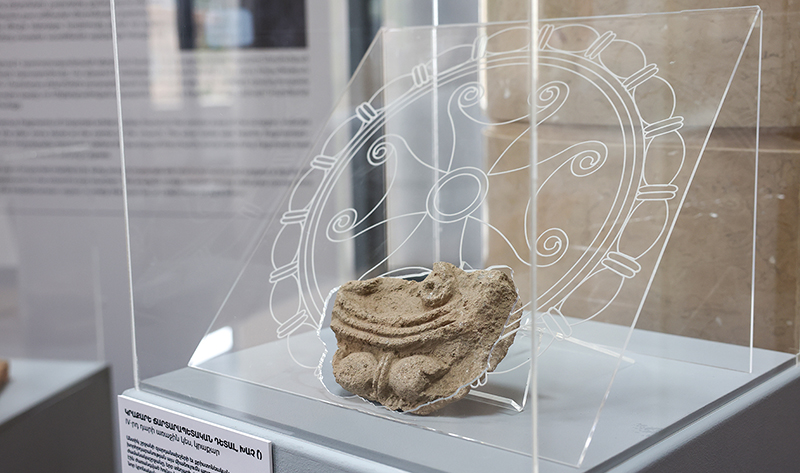
The exhibition features artifacts uncovered during the Artashat excavations, architectural details of the structure, the process of scientific restoration, and the results of advanced research methods used in the study.
The newly discovered structure was uncovered as part of the Armenian-German “Artaxata” joint research project. The initiative is being carried out through cooperation between the Institute of Archaeology and Ethnography of Armenia’s National Academy of Sciences and the Institute of Classical and Early Christian Archaeology at the University of Münster.
In 2023, geomagnetic surveys identified the presence of an octagonal structure. Excavations conducted in 2024 confirmed that the building was in fact a church.
According to researchers, the church is distinguished by its octagonal design, the organization of its interior liturgical space, its columned architectural system, and engravings preserved in the wall plaster.
Based on artifacts discovered during the excavations and the results of carbon dating analysis, the church has been dated to the first quarter of the fourth century AD.
Researchers believe the structure may be connected to the era of King Tiridates III the Great and St. Gregory the Illuminator, a formative period in Armenia’s early Christian church-building tradition.
The opening of the exhibition was followed by a workshop and scholarly discussion.
Among those attending the opening ceremony were Minister of Education, Science, Culture and Sports Zhanna Andreasyan, Deputy Minister Alfred Kocharyan,
Head of the European Union Delegation to Armenia Ambassador Vassilis Maragos, German Ambassador to Armenia Claudia Busch, representatives of the diplomatic corps accredited in Armenia, and prominent figures from the scientific and cultural communities.
The exhibition presents one of the most significant archaeological discoveries in Armenia in recent years: an early Christian octagonal church uncovered in Artashat, considered one of the earliest known examples of Armenian Christian architecture.
Welcoming the guests, Minister Zhanna Andreasyan emphasized that the exhibition marks an important milestone in the large-scale work being carried out in the historic capital of Artashat. According to her, the exhibition summarizes the achievements made to date while also creating new opportunities for professional discussion.
“These discussions will allow us to continue our work and uncover new layers within the rich heritage of the historic capital of Artashat. With its numerous historical layers and cultural significance, Artashat represents an exceptional heritage site not only for Armenia but also for researchers from around the world,” she said.
The minister stressed the government’s commitment to ensuring the continued excavation, preservation, restoration, and stabilization of the archaeological layers discovered at the site, as well as improving public access and infrastructure.
Andreasyan also highlighted the importance of promoting Artashat as a destination, noting its substantial tourism potential and strategic value in helping society connect with its own history.
“When we speak about our history, we first need to be able to see that history,” she said, adding that Artashat is one of the rare places where visitors can visibly encounter the cultural, technological, and social layers of different historical periods.
The minister further emphasized the scientific significance of the discovery, noting that it was made possible through close cooperation between Armenian and German scholars.
The discovery is particularly important for the study of early Christian heritage, revealing a previously little-explored layer of history that could serve as the foundation for future research by both Armenian and international scholars.
Andreasyan thanked Germany for its effective cooperation in the field of science and highlighted the importance of Armenian-German joint projects. She also referred to cooperation with European Union partners, noting that a comprehensive development concept for the Artashat site has already been prepared and that its implementation will open new opportunities for presenting and preserving the historic capital.
Matenadaran Director Ara Khzmalyan described the exhibition as a unique event within the institution’s scientific exhibition activities.
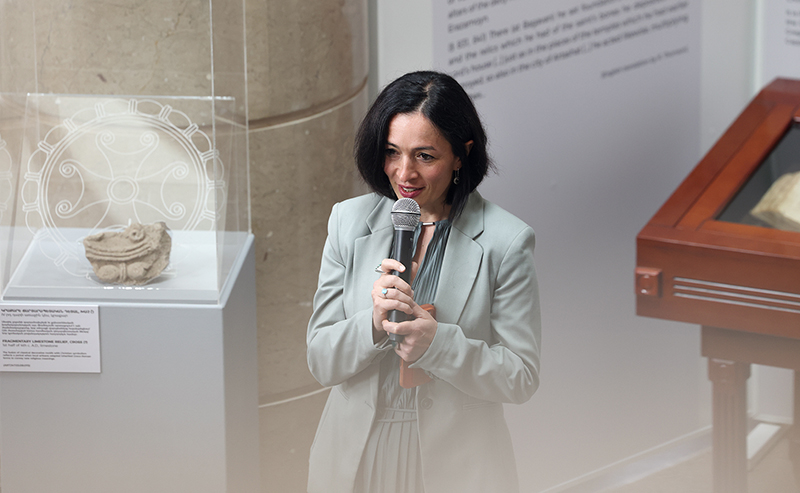
“This discovery is of exceptional importance not only for Armenian history and the history of the Armenian Church and Christianity, but also for the study of the early Christian era in general. Prior to this archaeological discovery, knowledge of the church existed only through manuscripts and written testimonies. Today, we are witnessing a remarkable material confirmation of those historical records,” he said.
German Ambassador Claudia Busch also underscored the historic importance of the discovery, stating that it is significant not only for Armenia and Germany but for the entire Christian world.
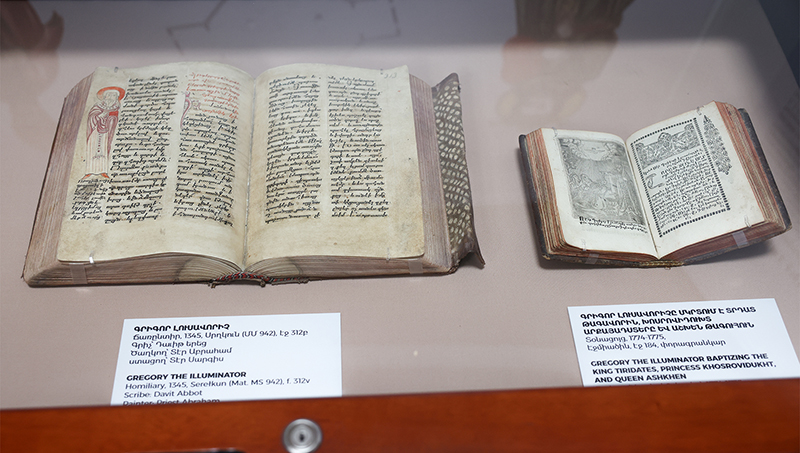
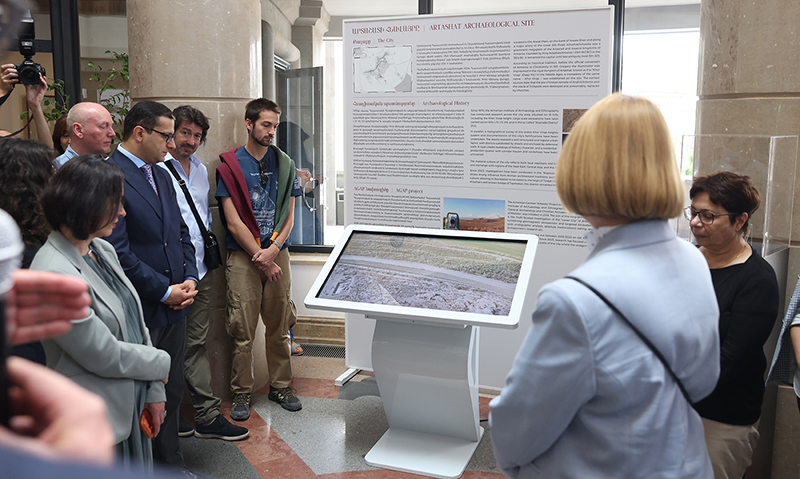
The exhibition features artifacts uncovered during the Artashat excavations, architectural details of the structure, the process of scientific restoration, and the results of advanced research methods used in the study.
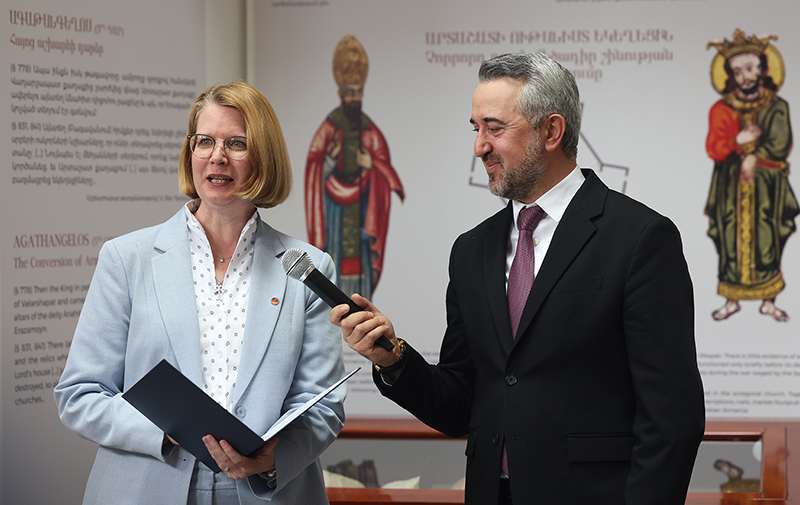
The newly discovered structure was uncovered as part of the Armenian-German “Artaxata” joint research project. The initiative is being carried out through cooperation between the Institute of Archaeology and Ethnography of Armenia’s National Academy of Sciences and the Institute of Classical and Early Christian Archaeology at the University of Münster.
In 2023, geomagnetic surveys identified the presence of an octagonal structure. Excavations conducted in 2024 confirmed that the building was in fact a church.
According to researchers, the church is distinguished by its octagonal design, the organization of its interior liturgical space, its columned architectural system, and engravings preserved in the wall plaster.
Based on artifacts discovered during the excavations and the results of carbon dating analysis, the church has been dated to the first quarter of the fourth century AD.
Researchers believe the structure may be connected to the era of King Tiridates III the Great and St. Gregory the Illuminator, a formative period in Armenia’s early Christian church-building tradition.
The opening of the exhibition was followed by a workshop and scholarly discussion.
Bu haber massispost kaynağından gelmektedir.
Haber metninde yer alan görüşler haber kaynağı (massispost) ve yazarına ait olup,
bolsohays.com sitesi haber hakkında herhangi bir görüş üstlenmemektedir.
Opinions expressed are those of the author(s)-(massispost). They do not purport to reflect the opinions or views of bolsohays.com
Diğer Haberler
-
Mart 1 Dava Case`sinde İstifa Edilen Dört Eski Ordu Müdürüne Karşı Suçlamalar
-
Moskova, Ermenistan Büyükelçisi`ni geri çağırdı
-
Ermenistan, Avrupa’ya tarım ürünleri ihracatını 5 kat artırmayı hedefliyor
-
Rusya, Ermenistan`dan ithal ettiği tarım ürünleri kısıtlamasını genişletiyor
-
Rusya, Ermenistan’dan kiraz, kayısı, şeftali ve diğer meyvelerin ithalatını kısıtlıyor
-
Ermeni gülleri ve sebzeleri için yeni ihracat rotaları açıldı
-
Ermenistan, Avrupa’ya tarım ürünleri ihracatını 5 kat artırmayı hedefliyor
-
Paşinyan: Ermenistan’da ilk yapay zekâ fabrikası faaliyete geçti
-
Paşinyan: Türkiye ve Azerbaycan ile normalleşme Ermenistan için yeni fırsatlar yaratacak
-
Çek basını: Bakü’de tutuklu bulunan Vardanyan, Vaclav Havel Ödülü’ne aday gösterildi
-
Ermeni yapay zeka şirketinin ilk fabrikası açıldı
-
Paşinyan ve Putin telefonda görüştü
Foto Galeri Tüm Galeriler
Video Galeri Tüm Videolar

Anket Tüm Anketler
Günün Sözü
Երբ Ուրիշներու համար կþաշխատիք, աշխատեցէք այն Միեւնոյն եռանդով, որով կþաշխատիք դուք ձեզի համար։